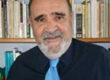


The deceased Olavo de Carvalho concluded that many of the Marxist theories were nothing more than fallacies and lies. For example, assuming that the class struggle is the builder of history has no basis in real life. Since people have more progress and better living conditions when they collaborate with each other. The class struggle would destroy everything, but they would not build anything.
However, the real danger of Marxism and wokism, its postmodern son, does not lie in its absurd pretensions to science, but in having served as a justification for committing all kinds of crimes. Let’s see.
During his “trial” for treason against Cuba – objectively, it was a theater staged by Fidel and Raúl – Commander Huber Matos testified to the communist infiltration in the revolutionary process.
Matos denounced that the Agrarian Reform was, in reality, an expropriation of land from small farmers and rice-growing families. Those ideas —which came from the minds of Ernesto Guevara and other communists— did not have the support of Cuban producers. But that didn’t matter to Castro, and to implement them he resorted to the tactic of all tyrants, imprisoning and killing his opponents.
But Fidel was only repeating the tactics that had been implemented a few decades earlier by another communist dictator, Joseph Stalin.
In his extensive work, Joseph Stalin: A Biography, the writer Robert Service tells us that during his youth the Russian dictator was, along with his gang, the main organizer of bank robberies and wealthy families. His biggest blow was in 1907, when his gang robbed a stagecoach of funds. After the assault they fled to Finland. The robbery filled Vladimir Lenin with pride.
In 1922, two years after Lenin’s death, Joseph Stalin seizes power in the USSR, and begins a purge of his opponents. Leon Trotsky, his greatest enemy, was exiled from the Soviet Union in 1929; he goes into exile in Mexico. But Stalin had already ordered his execution. In 1940 the Catalan communist militant Jaime Ramón Mercader del Río would be in charge of fulfilling that order.
Although Marxist theorists say that the two had different views on the future of communism, in truth it was a vile and vulgar thug fight for power. Obviously, Stalin was more bloodthirsty than Trotsky.
However, it is not necessary to go back so far in history, nor travel so far to find examples, Álvaro García Linera, former vice president of Bolivia, was one of the main exponents of indigenismo, a kind of Bolivian version of wokismo.
His militancy in the indigenist cause was not limited to writing books or articles, but rather, in the early 1990s, he founded the Tupac Katari Guerrilla Army (EGTK). The organization was involved in assaults on remittance trucks and attacks on telecommunications antennas.
The indigenist discourse served so that the crimes committed by the EGTK are seen in public opinion as an act of historical “vindication”. But as Max Manwaring, an expert in security and gang violence, says, they are simple thugs trying to appear as social fighters.
Even Evo Morales himself is a product of NGOs and drug cartel money. His image as the “leader” of the indigenous people is nothing more than a theatrical scene to hide his criminal nature, pedophilia included.
By way of closing, those who think that everything is reduced to a Cultural Battle or electoral processes are, in the best of cases, functional to dictatorships. The militants of Castrochavism are willing to maintain power at any cost, including civil wars and state terrorism (Hugo Chávez himself said so). It was never about politics, but about transnational crime.
“The opinions published here are the sole responsibility of their author.”